Tears from the Sky: A Reality of Cloudbursts….
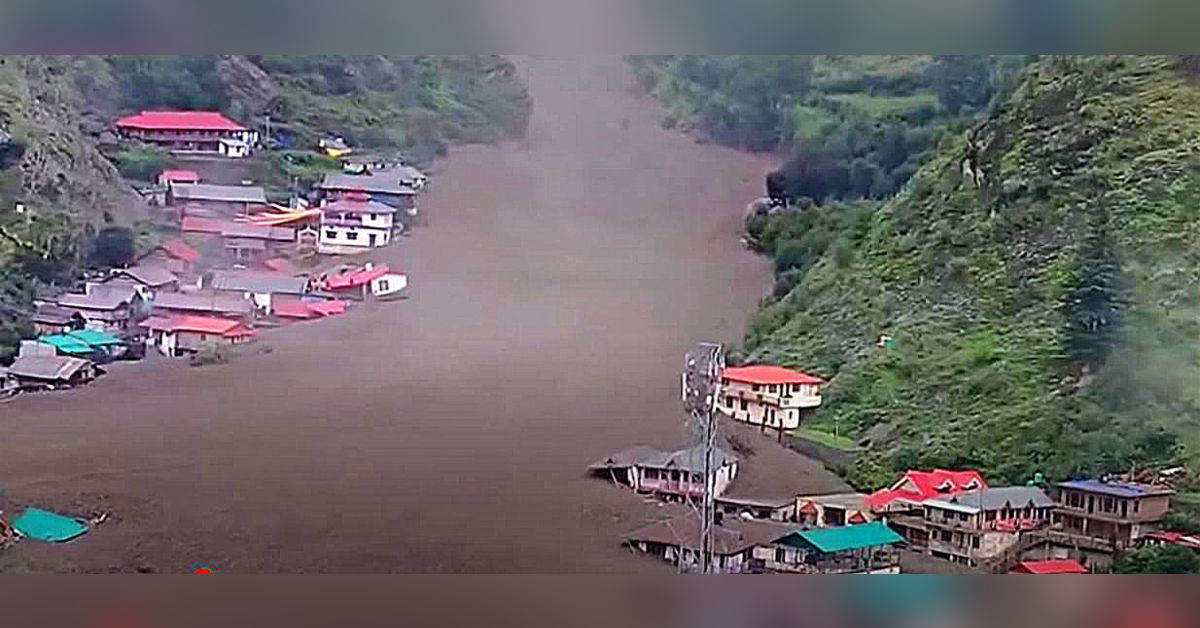
On August 5, 2025, Himachal Pradesh and Uttarakhand were again battered by the sky’s fury. In Uttarakhand’s Dharali village, a sudden cloudburst over the Kheer Ganga catchment unleashed flash floods that swept away homes, shops, and hotels. As per reports, a few lives have been lost so far, and many people are still missing. The chaos spread as a second burst near Sukhi Top deepened the disaster. Rescue teams rushed in, but the damage was already done.
These aren’t isolated incidents anymore. Every monsoon brings headlines of cloudbursts and landslides from the hills. Yet, most of us still don’t fully understand what triggers such sudden devastation. Why do they strike specific regions? Can we predict or prevent them?
Let’s unpack the science, impact, and rising threat of cloudbursts.
One moment, it’s just another monsoon day, clouds hovering lazily, the kind that make you crave chai and pakoras. And the next, it’s war from above. The rain doesn’t fall; it explodes. Landslides roar down mountainsides. Entire roads vanish. Families run, some barefoot, some crying. This isn’t just a downpour. It’s a cloudburst….
Every year, somewhere in the northern hills of India, the monsoon carries a secret weapon. It doesn’t always announce itself. It just happens, with devastating force. And even as we talk about what happened in 2025, the truth is this: this is not a one-off event. Cloudbursts are a pattern now, not a surprise. And we seem to be learning very little from their angry return.
The Burst Behind the Disaster
What really is a cloudburst? The term sounds poetic, even gentle. But ask someone who’s lived through one, and you’ll get stories of horror. Technically, a cloudburst is when a massive amount of rain, over 100 millimeters, drops in an hour or less, in a very small area. But in reality, it’s like a dam breaking over your head. There’s no time to prepare. No space to breathe. The water comes down so quickly, the earth can’t drink it. The result is instant flooding, erosion, and sometimes, death.
It’s no coincidence that places like Uttarakhand, Himachal Pradesh, and parts of Jammu and Kashmir face these disasters more often. The terrain is steep, the drainage is poor, and the environment is overstressed. The mountains are beautiful, yes. But they are also fragile. Every new road cut into a slope, every hilltop resort built without a second thought, adds one more crack in that fragile balance. And when nature has had enough, it doesn’t whisper. It crashes.
This year, again, parts of North India are reeling. Uttarkashi, Kullu, Mandi, and several lesser-known villages have suffered cloudbursts within days of each other. But if you scroll back just a little in time, 2023, 2022, 2019, 2016, you’ll see the same headlines: landslides, cloudbursts, flash floods. Different dates, same destruction.
The tragedy isn’t just in what happens. It’s in how quickly we forget.
What makes these events even more dangerous is how fast they strike. Unlike cyclones or heatwaves, cloudbursts don’t offer generous warnings. Sometimes, the India Meteorological Department (IMD) does issue alerts, but how many tourists on hill holidays check weather bulletins before driving up winding mountain roads? And even locals, familiar with the rhythm of monsoons, are finding it harder to predict when that one cloud will snap.
Why North India Feels Every Storm Deeply
The question that often gets asked is: why does this keep happening in the hills? The easy answer is geography. The tougher one is accountability. These regions are naturally prone to rapid weather shifts. But over the years, human actions, deforestation, over-construction, and mismanaged tourism, have pushed the ecosystem to its edge. Trees that once anchored slopes have been replaced with concrete. Forests have been cleared to make way for hotels and highways. The mountains are now naked and exposed. When the rain hits, they bleed.
If you’re imagining villages and rural areas being affected, think again. Even popular tourist spots like Shimla, Manali, and Srinagar are no longer safe from these sudden disasters. In fact, it’s the influx of people during the monsoon months, combined with overburdened infrastructure, that often turns a natural event into a human crisis.
There’s also something terrifyingly modern about how these ancient mountains are reacting. Climate scientists say the intensity and frequency of cloudbursts are increasing, and that climate change is pushing the monsoon to behave more unpredictably. What used to be seasonal and spread out is now more compressed, more aggressive. Rain doesn’t trickle anymore, it attacks.
What makes it worse is our collective lack of preparedness. Most people don’t know how to respond when a cloudburst strikes. Panic takes over. Villages have no early warning systems. Tourists often ignore advisories. Rescue operations are heroic but difficult, roads get washed away, power lines fall, mobile networks vanish. It’s not just about facing the storm, but about surviving what comes after.
And yet, after every monsoon season, the urgency fades. The media moves on. The public forgets. The mountains don’t.
Not Just Weather; A Warning Cry
There’s no one-line solution to cloudbursts. They are, in some ways, natural. But their increased frequency and severity aren’t. They’re tied to how we’ve treated our landscapes and how we continue to ignore warning signs. It’s easy to blame the clouds. Harder to look down and see what we’ve done to the ground.
So as the monsoon continues to paint India in grey and green, and as more hills tremble under the weight of sudden rain, let’s not just see these stories as weather updates. Let’s see them for what they are: wake-up calls. The kind that scream louder each year. The kind that won’t wait for us to be ready.
Because the next time a cloud decides to burst, it might not come with a warning.